
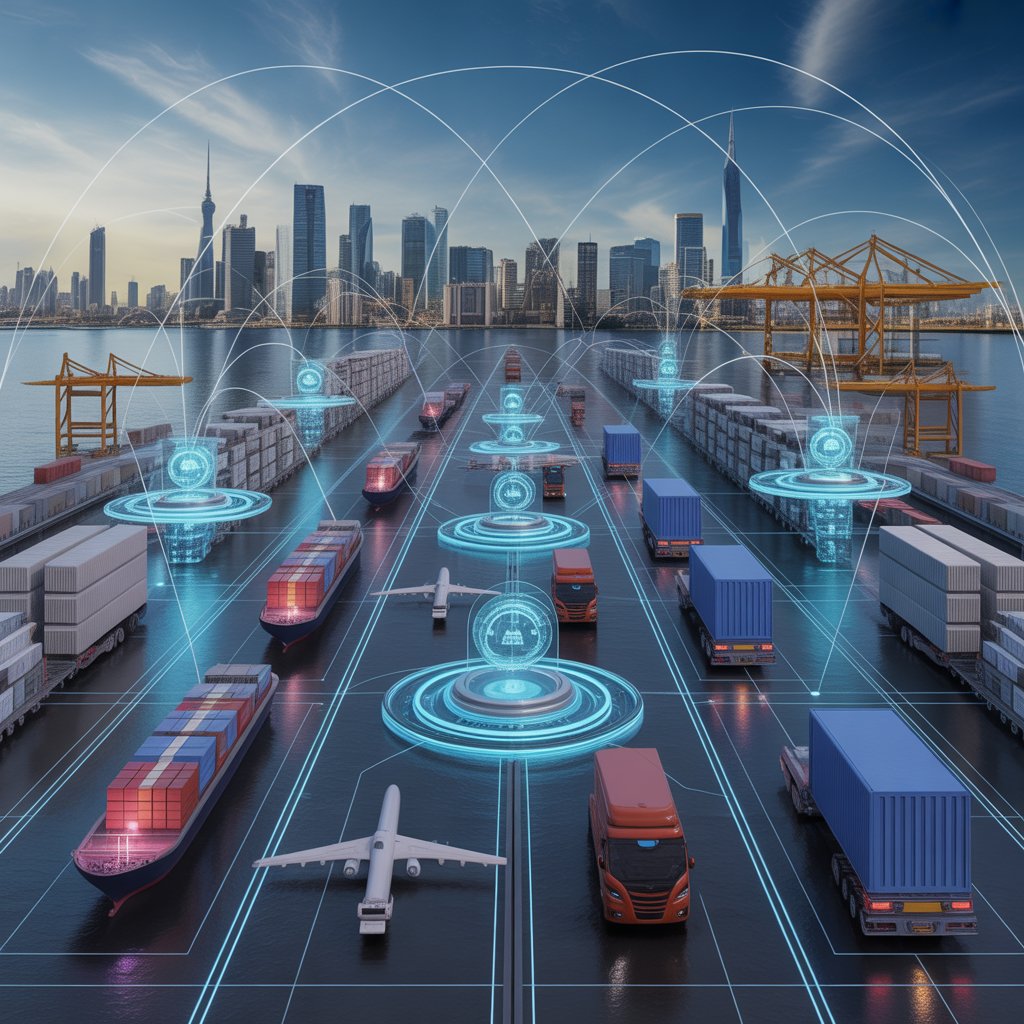
The logistics and supply chain industry has always been at the heart of global commerce. In today’s interconnected economy, the speed, reliability, and transparency of supply chains determine not only the competitiveness of enterprises but also their ability to meet rising customer expectations. The traditional models of logistics management, once focused primarily on efficiency and cost control, are now being disrupted by new realities such as global trade complexities, market volatility, e-commerce growth, sustainability demands, and unforeseen disruptions like geopolitical shifts and pandemics. To thrive in this environment, businesses require more than incremental improvements; they need intelligent, end-to-end digital solutions that allow them to transform their supply chains into agile, resilient, and future-ready networks.
At Hanvix, we believe that the future of logistics lies in leveraging the full potential of SAP-powered digital ecosystems. By combining process innovation, advanced analytics, artificial intelligence, and automation, we help organizations achieve real-time visibility, predictive capabilities, and collaborative efficiency across their supply chains. This transformation not only enables operational excellence but also creates long-term strategic value.
The Challenges Shaping Modern Logistics
The logistics and supply chain industry is experiencing profound challenges that require strategic reinvention. Rising customer expectations demand faster delivery times, transparency at every stage, and seamless omnichannel experiences. Global trade disruptions, whether due to regulatory changes, natural disasters, or supply shortages, highlight the urgent need for resilient supply chain planning. Sustainability is no longer optional; enterprises are under increasing pressure to reduce carbon footprints and adopt environmentally conscious logistics models.
Traditional supply chains, which often relied on fragmented systems, manual planning, and reactive responses, are no longer sufficient in this landscape. Without digital transformation, businesses risk inefficiency, delays, higher costs, and lost opportunities. The solution lies in building intelligent supply chains powered by technologies such as SAP S/4HANA, SAP Integrated Business Planning (IBP), Internet of Things, predictive analytics, and artificial intelligence.
Digital Transformation with SAP for Logistics
SAP has redefined how logistics and supply chain operations can be managed in the digital era. Through its integrated solutions, enterprises can unify data, automate processes, and gain real-time insights across procurement, warehousing, transportation, and distribution. With SAP S/4HANA as the digital core, businesses gain a simplified and intelligent foundation that enables transparency, speed, and scalability.
For logistics enterprises, SAP provides capabilities that extend across every stage of the supply chain. Procurement processes are streamlined through automated sourcing and supplier collaboration. Inventory management becomes predictive, ensuring that stock levels are optimized without creating waste or shortages. Transportation planning is enhanced with real-time route optimization, tracking, and fleet management, reducing both costs and environmental impact. Warehousing operations become smarter with automation and robotics, powered by data-driven decision-making.
By leveraging SAP IBP, companies can achieve demand-driven planning that adapts quickly to market fluctuations. This level of agility transforms logistics from being reactive to proactive, allowing enterprises to predict disruptions, adjust operations, and continue delivering value to customers.
Enhancing Visibility and Collaboration
One of the most significant shifts in the logistics industry is the move toward complete visibility across the supply chain. Customers today expect to know where their shipments are at all times, and enterprises require transparency to manage risks effectively. SAP-powered digital platforms provide exactly that—real-time insights into the movement of goods, inventory levels, supplier performance, and customer demand.
With these insights, businesses can identify potential delays before they occur, reroute shipments dynamically, and ensure customers receive accurate delivery updates. Visibility extends beyond internal operations to include suppliers, partners, and customers, creating a collaborative ecosystem where all stakeholders can make informed decisions. This level of connectivity is critical in today’s interconnected global economy, where even minor disruptions can have cascading effects.
Intelligent Automation and AI in Logistics
The integration of artificial intelligence and intelligent automation within the SAP ecosystem is reshaping logistics operations. Intelligent Robotic Process Automation enables the automation of repetitive tasks such as invoice processing, order management, and shipment scheduling, freeing up human resources to focus on strategic activities. AI-driven algorithms provide predictive insights, allowing enterprises to forecast demand, optimize routes, and identify potential supply risks.
In warehousing, automation and robotics powered by AI improve speed, accuracy, and efficiency. Predictive maintenance powered by IoT sensors ensures that critical assets remain operational, minimizing downtime and unexpected costs. These innovations collectively create a supply chain that is not only efficient but also self-learning and adaptive to change.
Building Sustainable and Resilient Supply Chains
Sustainability is becoming a defining priority in the logistics industry. Enterprises are expected to reduce carbon emissions, adopt eco-friendly practices, and build sustainable logistics models without compromising on speed or reliability. SAP solutions enable organizations to monitor and manage their carbon footprint, optimize transportation routes to reduce fuel consumption, and adopt circular supply chain models that minimize waste.
Resilience is equally important. As global supply chains become more complex, the ability to withstand disruptions and recover quickly has become a critical success factor. SAP provides scenario planning, risk management, and simulation tools that allow enterprises to prepare for multiple contingencies. By embedding resilience and sustainability into the core of logistics operations, businesses not only meet regulatory and societal expectations but also gain a competitive edge in a market where trust and responsibility matter.
The Role of Data and Advanced Analytics
Data-driven decision-making has become the backbone of modern logistics. SAP Analytics Cloud and SAP BW/4HANA empower enterprises with advanced analytics, enabling them to move from hindsight to foresight. Real-time dashboards, predictive models, and AI-driven insights allow decision-makers to identify trends, optimize performance, and seize new opportunities.
For logistics providers, data analytics enables improved demand forecasting, better supplier management, and more efficient utilization of resources. Real-time insights empower organizations to balance supply and demand dynamically, reduce costs, and improve customer satisfaction. This shift from reactive management to proactive strategy transforms logistics into a source of value creation rather than a cost center.
Hanvix: Partnering for Intelligent Transformation
At Hanvix, we combine deep expertise in SAP technologies with an understanding of the unique challenges facing the logistics and supply chain industry. Our solutions are designed to simplify operations, enhance transparency, and unlock new levels of efficiency. We work closely with enterprises to reimagine their supply chains as intelligent, connected ecosystems that can thrive in a rapidly changing world.
Our approach goes beyond technology implementation; it is about creating measurable business impact. By aligning SAP solutions with industry-specific requirements, we ensure that our clients achieve faster delivery times, optimized costs, greater sustainability, and improved customer experiences. With Hanvix as a trusted partner, logistics enterprises can confidently embrace digital transformation and shape the future of global supply chains.